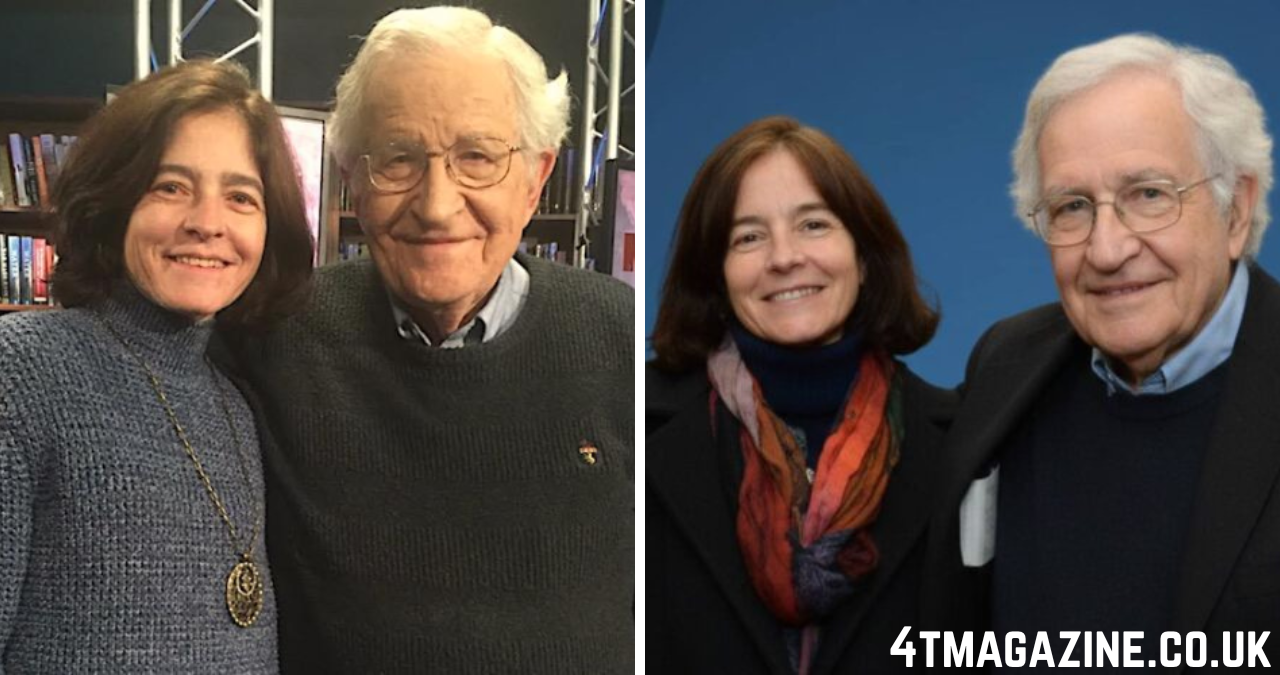
Valeria Wasserman is best known to many readers because of her marriage to Noam Chomsky, the world-renowned linguist, philosopher, author, and political critic. However, reducing her identity only to “Noam Chomsky’s wife” would miss the quieter but meaningful story of a Brazilian woman connected to language, translation, culture, and intellectual life. She is often described as a translator and language professional, someone whose work reflects precision, patience, and a deep understanding of communication across cultures.
Public curiosity around Valeria Wasserman has grown because people search for terms such as Valeria Wasserman biography, Valeria Wasserman Wikipedia, Valeria Wasserman age, and Valeria Wasserman Chomsky. Yet despite that interest, she remains a deeply private personality. Unlike many public figures connected to famous intellectuals, she has not built her identity around media appearances, interviews, or social media attention. Her profile is shaped by discretion, education, and a life lived mostly outside the spotlight.
Who Is Valeria Wasserman?
Valeria Wasserman, also known publicly as Valeria Wasserman Chomsky, is a Brazilian translator and language professional. She became more widely known after marrying Noam Chomsky in 2014. Chomsky, one of the most influential thinkers in modern linguistics and political commentary, had previously been married to Carol Doris Schatz Chomsky until her death in 2008. Valeria’s marriage to Chomsky brought her name into international searches, especially among readers interested in Chomsky’s personal life.
What makes Valeria Wasserman interesting is the contrast between her public association and private lifestyle. She is connected to one of the most recognized intellectual names of the last century, but she herself appears to value privacy over fame. There is no large public archive of interviews, personal statements, or promotional appearances from her. This makes her biography different from many celebrity profiles because it must be written with care, avoiding exaggeration and respecting the limited confirmed information available.
For readers searching “Valeria Wasserman Wikipedia,” it is important to understand that not every notable person has a detailed independent Wikipedia-style public record. Much of Valeria’s visibility comes through reliable news reports about Noam Chomsky’s later life, especially his residence in Brazil and his recovery after health issues. Her own story is best understood through the themes of language, Brazilian identity, marriage, care, privacy, and intellectual companionship.
Early Life and Brazilian Background
Valeria Wasserman was born in Brazil, a country known for its rich cultural diversity, strong literary traditions, and deep relationship with the Portuguese language. While her exact early family background is not widely documented in reliable public sources, many biographical summaries describe her as someone raised in a Brazilian environment where language and education played an important role. Her Brazilian identity remains central to her public image because later reports place her and Chomsky in Brazil, where he has spent significant time in recent years.
Brazil is not just a background detail in Valeria Wasserman’s life. It is part of the cultural world that shaped her professional and personal identity. Translation is never only about replacing words from one language with another; it is about carrying meaning, tone, emotion, and context across borders. A Brazilian translator working with Portuguese and English must understand not only grammar but also cultural feeling. This gives Valeria’s reported profession a deeper significance.
Her connection to Brazil also became more visible after Chomsky’s later-life move and medical recovery there. Public reports noted that Chomsky was in Brazil after suffering a stroke and that Valeria played an important role in communicating updates about his condition. This placed her in a sensitive public position: not as a celebrity, but as a spouse, caregiver, and private individual briefly pulled into the global news cycle.
Education and Interest in Language
Public biographical profiles commonly report that Valeria Wasserman studied areas connected to law, language, and translation. Some profiles mention studies at Brazilian institutions and describe her as having a background that combines analytical thinking with linguistic skill. Although not every detail of her education is confirmed through primary public records, the overall picture often presented is of a woman with a serious academic and professional interest in language.
This combination of law and language, if accurately reported, would make sense for a translator. Legal study develops attention to structure, meaning, evidence, and exact wording. Language study develops sensitivity to tone, expression, and interpretation. Translation requires both abilities. A translator must understand what a sentence says, what it implies, and how it should be carried into another language without losing its original force.
In Valeria Wasserman’s case, her educational image fits naturally with her public connection to Chomsky. Chomsky’s world is built around language, syntax, meaning, politics, and ideas. Valeria’s reported professional life in translation suggests that she also belongs to a world where words matter. This does not mean her work should be overshadowed by Chomsky’s fame. Instead, it shows that their relationship appears to be connected by shared respect for language and intellectual life.
Career as a Translator and Language Professional
Valeria Wasserman is most often described as a translator. Translation is a profession that requires discipline, cultural awareness, and intellectual patience. Good translators are often invisible when they do their job well, because the reader feels the meaning clearly without noticing the labor behind it. This may be one reason Valeria’s own public profile is modest despite her association with a globally famous figure.
A translator’s work can include literary texts, academic documents, cultural projects, legal material, business writing, or institutional communication. Public sources do not provide a complete verified catalogue of Valeria Wasserman’s translation work, so it would be irresponsible to invent a long list of projects. What can be said is that she is widely identified with language work, especially Portuguese and English communication. That alone places her in a professional field where accuracy and trust are essential.
Her career also reflects a type of achievement that is often underappreciated. Translators help ideas travel. They allow readers, institutions, writers, and thinkers to communicate beyond national and linguistic borders. In a world shaped by globalization, academic exchange, publishing, and international conversation, translation is not a minor task. It is a bridge between cultures. Valeria Wasserman’s professional identity, therefore, deserves recognition beyond her marriage.
Marriage to Noam Chomsky

Valeria Wasserman married Noam Chomsky in 2014. Their marriage attracted attention because Chomsky was already one of the most famous intellectuals in the world and because he had lived a long public life as a scholar, critic, and author. For many readers, this marriage introduced Valeria’s name for the first time. She became known as Chomsky’s second wife after the death of his first wife, Carol Doris Schatz Chomsky.
The public image of their marriage is not built on celebrity glamour. Instead, it appears quieter and more personal. Chomsky has long been known as a private person despite his massive public influence. Valeria Wasserman seems to share that preference for privacy. Their life together has been mentioned in interviews and news reports, but they have not turned their relationship into a public performance.
Their connection also shows a softer side of Chomsky’s later life. After decades of intellectual labor, political criticism, academic debate, and public controversy, his marriage to Valeria became part of a more personal chapter. She has appeared in public reports not as a publicist or media personality, but as a spouse involved in his later-life care and personal world.
Life in Brazil and Public Attention
Brazil became an important part of Valeria Wasserman and Noam Chomsky’s later life together. Reports have stated that the couple had a residence in Brazil and that Chomsky spent significant time there. This connection to Brazil is closely tied to Valeria’s background and identity. For Chomsky, Brazil became not only his wife’s native country but also a place connected to his recovery and later years.
In 2024, Valeria Wasserman received renewed public attention when false reports about Noam Chomsky’s death spread online. She responded to those reports and denied them, helping correct misinformation during a moment of confusion. This incident showed how quickly public figures and their families can become part of a digital news storm, especially when social media amplifies rumors before facts are confirmed.
Her role during that period was important because she provided clarity at a sensitive time. She did not appear to seek attention; rather, she responded because the situation required correction. This reinforced the image of Valeria Wasserman as someone who remains private but steps forward when necessary to protect truth, dignity, and family privacy.
Why People Search for Valeria Wasserman Wikipedia
Many people search for “Valeria Wasserman Wikipedia” because they want a quick, organized profile with details such as age, nationality, career, husband, and background. The search intent is understandable. Readers want to know who she is, what she does, and how she became connected to Noam Chomsky. However, the available public information about her is limited compared with the information available about Chomsky.
This is why any responsible Valeria Wasserman biography should avoid unsupported claims. Some online profiles mention her birth year, educational history, career roles, and personal details, but not all of those details are supported by strong primary sources. A careful article should separate confirmed public information from claims that are only repeated across biography websites.
The most reliable facts are that Valeria Wasserman is Brazilian, she is publicly known as Noam Chomsky’s wife, she married him in 2014, she is associated with translation, and she has been mentioned in news reports concerning Chomsky’s life in Brazil and health updates. Beyond that, details should be handled with caution unless stronger documentation becomes available.
Personality, Privacy, and Public Image
Valeria Wasserman’s public image is defined by privacy. In a time when many people connected to famous figures build online brands, she appears to have chosen the opposite path. This makes her unusual in modern public culture. Her life reminds readers that not every person near fame wants fame for themselves. Some people remain devoted to their work, relationships, and personal values without turning their lives into public content.
Her privacy also makes her more difficult to write about, but that difficulty is important. A biography should not fill empty spaces with fiction. It should respect what is known and acknowledge what is not known. In Valeria’s case, the lack of constant public exposure may actually say something meaningful about her character. It suggests restraint, dignity, and a preference for a life guided by personal substance rather than public attention.
This quiet public image may also be part of why people remain curious about her. Mystery often increases search interest. Readers want to know more about the woman beside one of the most influential intellectuals of modern history. Yet the most honest answer is that Valeria Wasserman’s life is partly visible and partly private, and both aspects should be respected.
Conclusion
Valeria Wasserman is a Brazilian translator and language professional best known for her marriage to Noam Chomsky. Her story is not one of celebrity spectacle but of quiet presence, education, cultural connection, and private strength. She represents a kind of public figure who is known because of proximity to a famous person but who has maintained her own dignity by avoiding unnecessary exposure.
A complete Valeria Wasserman biography must therefore balance curiosity with responsibility. She is connected to language, Brazil, translation, and one of the most famous intellectual lives of the modern era. But she is also a private individual whose story should not be exaggerated for attention. For readers searching “Valeria Wasserman Wikipedia,” the most accurate portrait is simple: she is a Brazilian translator, Noam Chomsky’s wife, and a private woman whose life became publicly visible through love, language, and loyalty.
FAQs About Valeria Wasserman
1. Who is Valeria Wasserman?
Valeria Wasserman is a Brazilian translator and language professional best known as the wife of Noam Chomsky. She is often searched online because of her connection to Chomsky, but she has maintained a private life and does not appear to seek public fame.
2. Is Valeria Wasserman on Wikipedia?
Many readers search for Valeria Wasserman Wikipedia, but detailed independent information about her is limited. Most public information about Valeria Wasserman appears in biographical profiles and news reports related to Noam Chomsky.
3. What is Valeria Wasserman known for?
Valeria Wasserman is known for her work as a translator and for her marriage to Noam Chomsky. She also gained public attention when she responded to false reports about Chomsky’s death and helped clarify his condition.
4. When did Valeria Wasserman marry Noam Chomsky?
Valeria Wasserman married Noam Chomsky in 2014. Their marriage became a later-life personal chapter for Chomsky after the death of his first wife, Carol Doris Schatz Chomsky.
5. What is Valeria Wasserman’s nationality?
Valeria Wasserman is Brazilian. Her Brazilian background is an important part of her public identity, especially because she and Noam Chomsky have been connected to life in Brazil during his later years.