Artificial intelligence is rapidly transforming Nerovet AI Dental Company, and dentistry is one of the fastest-growing areas where this change is becoming highly visible. Among the emerging names in this space is the Nerovet AI Dental Company, a platform frequently described in online discussions and industry content as an AI-driven dental technology solution focused on improving diagnostics, imaging analysis, and clinical efficiency. While it is still relatively new and not as widely documented as major established dental AI providers, it has gained attention for its association with smart dentistry, automation, and advanced imaging support systems. The broader vision behind Nerovet AI aligns with a global shift toward digital dentistry, where machine learning tools assist professionals in detecting oral diseases earlier, improving accuracy, and enhancing patient communication through visual and data-driven insights.
In modern dentistry, practitioners handle a massive amount of visual data every day, including X-rays, panoramic scans, and CBCT imaging. Traditional interpretation depends heavily on human expertise, which can vary between clinicians. Nerovet AI Dental Company is often positioned as a solution to reduce this variability by introducing artificial intelligence systems that can analyze dental images quickly and highlight potential concerns. This does not replace dentists but instead provides a decision-support layer that improves confidence in diagnosis and treatment planning. The idea of combining human expertise with AI-driven assistance reflects the growing demand for efficiency and precision in dental care, especially as patient expectations for faster and more accurate services continue to rise in 2026.
What Is Nerovet AI Dental Company and How Does It Work in Modern Dentistry?
The Nerovet AI Dental Company is commonly described as a technology platform that uses artificial intelligence, machine learning, and image recognition to support dental diagnostics and workflow management. Its core focus is typically on analyzing dental imaging such as bitewing X-rays, periapical radiographs, and CBCT scans. By processing these images through trained AI models, the system attempts to identify early signs of dental issues such as cavities, bone loss, periodontal disease, and other oral health abnormalities that may not always be immediately visible to the human eye. This type of AI-assisted interpretation is becoming increasingly relevant as dental clinics aim to reduce diagnostic errors and improve early detection rates.
At the technical level, systems associated with Nerovet AI are often described as being trained on large datasets of dental images. These datasets allow the model to recognize patterns and detect anomalies by comparing new images against previously learned examples. The output is usually presented in the form of overlays, confidence scores, or visual highlights on the X-ray, helping dentists quickly interpret results. Some reports also suggest integration with cloud-based systems, allowing faster processing and remote accessibility. This makes the technology particularly useful in clinics with high patient volume or limited specialist availability.
However, it is important to understand that Nerovet AI is generally positioned as a support tool rather than a diagnostic authority. Dentists remain responsible for final decisions, while AI acts as an assistant that enhances speed and accuracy. This human-AI collaboration model is the foundation of most modern dental AI systems and reflects the cautious approach required in medical technology adoption.
Key Features and Applications of Nerovet AI in Dental Practice
One of the main reasons Nerovet AI Dental Company has attracted attention is its wide range of potential applications in clinical and administrative dental workflows. A key feature often highlighted is automated radiograph analysis, where AI scans dental images and identifies potential problem areas such as decay, infections, or structural damage. This allows dentists to review flagged regions more efficiently and reduces the time required for manual interpretation. In busy dental environments, even small improvements in efficiency can significantly increase patient throughput and service quality.
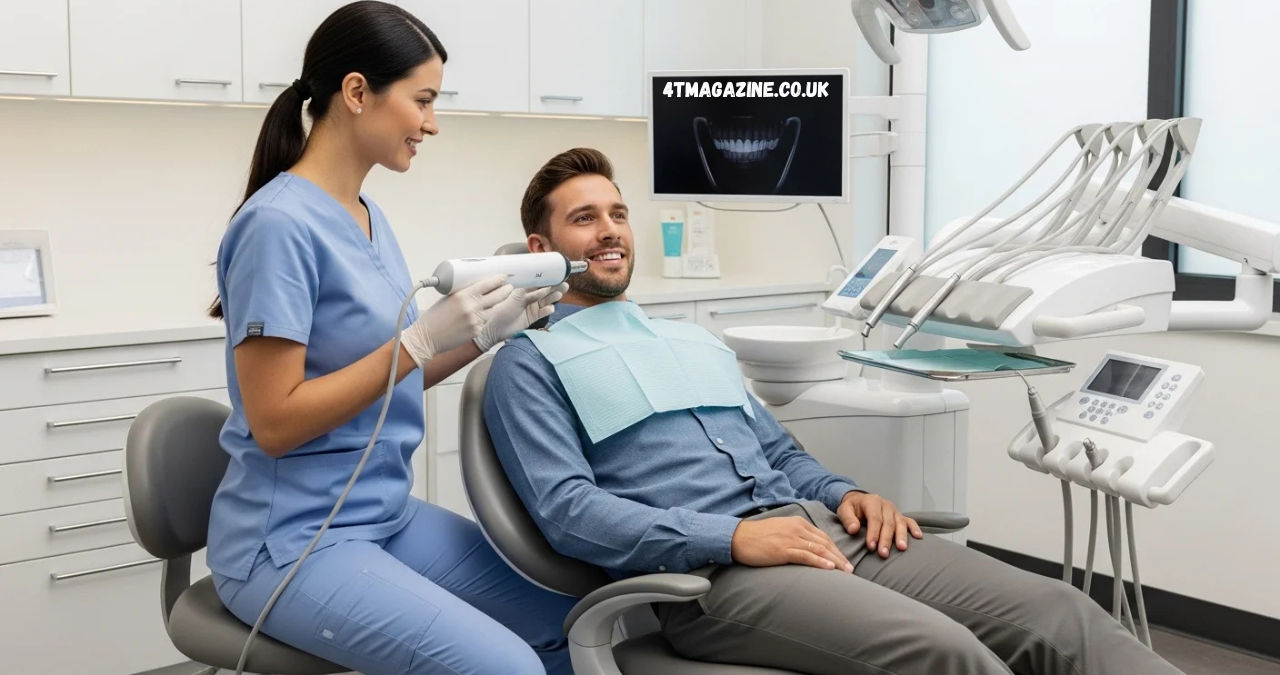
Another major application is treatment planning and patient communication. AI-generated visual overlays can help dentists explain conditions more clearly to patients, improving trust and treatment acceptance rates. Instead of relying only on verbal explanations or traditional X-rays, clinicians can show AI-enhanced visuals that highlight issues in an easy-to-understand format. This educational aspect is particularly valuable in modern dentistry, where patient awareness and engagement play a critical role in treatment success.
Beyond diagnostics, Nerovet AI-related systems are also associated with workflow automation. This includes tasks such as documentation, case summarization, and integration with dental practice management systems. By reducing manual administrative work, dentists can focus more on clinical care rather than paperwork. Additionally, some applications extend into teledentistry, where AI assists in preliminary assessments during remote consultations. Together, these features represent a broader movement toward intelligent, connected dental ecosystems powered by artificial intelligence.
Benefits of Nerovet AI Dental Technology for Clinics and Patients
The adoption of Nerovet AI Dental Company solutions offers several benefits that impact both dental professionals and patients. One of the most significant advantages is improved diagnostic consistency. Since AI systems analyze images based on learned patterns rather than subjective interpretation, they can reduce variability between different practitioners. This leads to more standardized evaluations and helps ensure that early signs of disease are not overlooked.
Another important benefit is speed. AI can process and analyze dental images in seconds, significantly reducing the time required for diagnosis. In a clinical environment where time efficiency is crucial, this allows dentists to see more patients without compromising quality of care. Faster diagnosis also contributes to quicker treatment planning, which can improve patient outcomes and reduce the progression of dental diseases.
From a patient perspective, AI-enhanced dentistry improves transparency and communication. Visual reports generated by AI make it easier for patients to understand their oral health conditions, increasing trust in recommended treatments. Additionally, early detection capabilities can lead to less invasive procedures and lower long-term treatment costs. For clinics, the operational benefits include streamlined workflows, reduced workload, and improved overall productivity.
Challenges, Limitations, and Future Potential of Nerovet AI Dental Company

Despite its promising capabilities, the Nerovet AI Dental Company concept also faces several challenges. One of the most important concerns is the lack of extensive publicly available clinical validation compared to more established dental AI providers. In healthcare, regulatory approval and peer-reviewed studies are critical for trust and widespread adoption. Without these, adoption tends to remain cautious.
Another limitation involves data dependency. AI systems require large and diverse datasets to perform accurately across different populations and imaging conditions. If training data is limited or biased, diagnostic accuracy may vary. Additionally, there are ongoing concerns about patient data privacy and security, especially when cloud-based processing is involved.
Looking ahead, however, the future of AI in dentistry remains extremely promising. Technologies like Nerovet AI are part of a larger shift toward smart dentistry, where predictive analytics, automation, and machine learning become standard tools in dental clinics. Future developments may include deeper integration with robotic dentistry, real-time diagnostic assistants, and fully digital treatment planning systems. As the technology matures, regulatory frameworks and clinical validation are expected to strengthen, making AI-assisted dentistry more reliable and widely accepted.
Conclusion
The Nerovet AI Dental Company represents an emerging direction in modern dental innovation where artificial intelligence supports clinical decision-making, enhances imaging interpretation, and improves workflow efficiency. While it is still developing in terms of documentation and validation, its concept aligns closely with the global trend of integrating AI into healthcare systems. Dentistry is gradually evolving from purely manual diagnostic methods to hybrid systems where human expertise is enhanced by intelligent software tools. If developed and validated further, technologies like Nerovet AI could play a major role in shaping the future of faster, more accurate, and more patient-friendly dental care.
FAQs
1. What is the Nerovet AI Dental Company used for in dentistry?
The Nerovet AI Dental Company is described as an AI-powered system used in dentistry for analyzing X-rays, detecting oral diseases, and assisting dentists in diagnosis and treatment planning.
2. How does Nerovet AI Dental Company improve dental diagnostics?
It improves diagnostics by using machine learning algorithms to identify patterns in dental imaging, helping detect issues like cavities and bone loss more quickly and consistently.
3. Is Nerovet AI Dental Company a replacement for dentists?
No, the Nerovet AI Dental Company is designed as a support tool. Dentists remain responsible for final diagnosis and treatment decisions.
4. What are the benefits of using Nerovet AI Dental Company in clinics?
Benefits include faster diagnosis, improved accuracy, better patient communication, workflow automation, and increased efficiency in dental practices.
5. What is the future of Nerovet AI Dental Company in smart dentistry?
The future includes deeper AI integration in dental workflows, predictive oral health analysis, and expanded use in digital and automated dentistry systems.