How Big Is Ponadiza is not a traditional geographic location that can be measured on a map, which is why the question “how big is Ponadiza” often leads to confusion. In modern online travel storytelling, Ponadiza is typically used as a conceptual or symbolic idea rather than a physical destination. It represents a blend of imagination, exploration, and narrative-driven travel writing rather than a real-world territory with measurable boundaries. Because of this, its “size” cannot be defined in kilometers, miles, or any scientific unit of measurement.
Instead, How Big Is Ponadiza is better understood as a flexible concept that changes depending on interpretation. For some writers and creators, it symbolizes a vast emotional and cultural landscape filled with experiences. For others, it behaves like a fictional destination used to explain deeper travel philosophies. This is why searches for its size often lead to mixed answers. Unlike real countries or cities, Ponadiza exists in the space between storytelling and imagination, making its scale subjective rather than physical.
Understanding How Big Is Ponadiza requires shifting perspective from geography to meaning. It is not about how large a place is in physical terms but how expansive the experience feels to those engaging with the concept. This article explores that idea in depth and breaks down what “size” truly means when applied to something that is not physically real but culturally expressive.
The Origin and Conceptual Nature of Ponadiza
The idea of How Big Is Ponadiza emerges from modern digital storytelling, particularly within travel blogs, conceptual writing, and creative geography. It is often used as a symbolic destination that represents exploration beyond traditional tourism. Rather than pointing to a fixed location, Ponadiza reflects a mindset of discovery, curiosity, and immersive experience. It is not found on any official map, nor is it recognized as a country, city, or region in real-world geography.
In many interpretations, Ponadiza functions as a narrative tool. Writers use it to describe a place that embodies emotional depth, cultural richness, and imaginative travel experiences. This allows creators to discuss travel in a broader sense, where the journey is more important than the destination itself. In this context, Ponadiza becomes a metaphor for exploring unfamiliar ideas, lifestyles, and perspectives rather than physically traveling to a defined place.
At the same time, the term sometimes overlaps with architectural language in unrelated contexts, where similar-sounding terms refer to structural overhangs or design elements. However, this usage is separate from the travel-related concept. The blending of meanings contributes to confusion online, making people wonder whether Ponadiza is a real location or something else entirely. In reality, its conceptual nature is what defines it, not physical boundaries or measurable dimensions.
How Big Is Ponadiza? Understanding Its Symbolic Scale
When asking “how big is Ponadiza,” it is important to recognize that traditional measurements do not apply. Ponadiza does not have a fixed geographic footprint, so its size is interpreted through experience rather than statistics. One way to understand its scale is through imagination-based geography, where writers describe it as a vast and layered world filled with diverse environments, even though these are not physically real.
Another way to define its size is through experiential duration. In narrative travel writing, Ponadiza is often described as taking days, weeks, or even months to “explore,” depending on the depth of engagement. This makes its size relative to time and perception rather than physical distance. The longer someone immerses themselves in the concept, the larger Ponadiza feels, expanding like a living story rather than a fixed landmass.
A third interpretation is cultural density. Instead of measuring land area, Ponadiza is seen as a space filled with symbolic experiences, traditions, and encounters. This makes it feel “large” in meaning even if it has no physical form. In this sense, its size is closer to an idea or worldview than a geographical region. The more meaning it carries, the bigger it becomes in the mind of the reader or traveler.
Ponadiza as a Travel Philosophy Rather Than a Place
Ponadiza is often used as a representation of a modern travel philosophy where the journey matters more than the destination. Instead of focusing on where one goes, this idea emphasizes how deeply one experiences a place. This approach transforms Ponadiza into a metaphor for slow travel, mindful exploration, and cultural immersion.
In this philosophical sense, its “size” expands with curiosity. A traveler who engages deeply with local culture, stories, and environments may perceive Ponadiza as vast and endless. On the other hand, someone who views travel superficially might see it as small or limited. This subjective nature makes Ponadiza unique because its scale depends entirely on perception rather than geography.
The concept also reflects how modern audiences engage with storytelling online. Many digital travel narratives use fictional or semi-fictional places to encourage readers to think beyond conventional tourism. Ponadiza fits into this trend by acting as a flexible idea that adapts to different interpretations. It is not meant to be measured but experienced through imagination and narrative exploration.
Why People Ask About Its Size and the Confusion Behind It
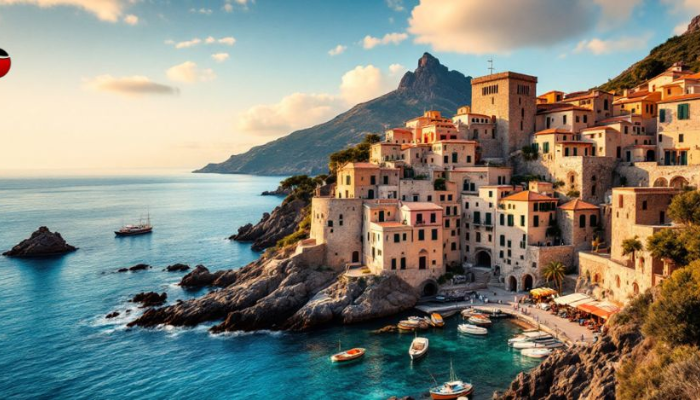
The question “how big is Ponadiza” often arises because people naturally expect all place-related terms to have physical dimensions. In the digital age, where content blends fiction, philosophy, and travel writing, it is easy for readers to assume that every named location must exist somewhere on a map. Ponadiza challenges that assumption by existing primarily as a conceptual construct.
Another reason for confusion is the way online content is structured. Some articles and blogs use Ponadiza as if it were a real destination to create engaging narratives. This storytelling technique can blur the line between fiction and reality, leading readers to search for factual information such as size, population, or location. However, Ponadiza does not follow real-world geographic rules.
Ultimately, the curiosity around its size highlights a broader trend in how people interact with modern travel content. Instead of simply visiting places, audiences are now engaging with ideas, metaphors, and experiences. Ponadiza is part of that shift, where meaning becomes more important than measurement.
Conclusion
Ponadiza does not have a physical size because it is not a real-world geographical entity. Its scale exists in imagination, storytelling, and interpretation. Depending on how it is understood, it can feel vast like an entire world or compact like a single idea. Its true “size” is defined by the depth of experience and meaning assigned to it rather than any measurable dimension.
In essence, Ponadiza is less about land and more about perception. It represents how modern travel writing and digital storytelling can transform simple words into expansive conceptual worlds. The answer to its size, therefore, is not numerical but experiential.
FAQs
1. How big is Ponadiza in real geography terms?
Ponadiza has no real geographic size because it is not an officially recognized physical location.
2. Is Ponadiza a real place or a fictional concept?
Ponadiza is generally considered a fictional or conceptual travel idea rather than a real place.
3. Why do people search for “how big is Ponadiza”?
People search this keyword because the term appears in travel-style storytelling, creating curiosity about its physical scale.
4. Can Ponadiza be measured in kilometers or miles?
No, Ponadiza cannot be measured in physical units because it does not exist as a tangible location.
5. What does Ponadiza represent in travel writing?
In travel writing, Ponadiza represents a symbolic journey focused on experience, imagination, and cultural exploration.